2026 Florida Building Code Changes: What Brandon Homeowners Need to Know Before December
Florida’s 9th Edition Building Code takes effect on December 31, 2026, and it brings meaningful changes to how roofs are built, repaired, and replaced. For Brandon homeowners planning any roof work this year, the timing of your project matters. The biggest updates include sealed roof deck requirements, enhanced roof-to-wall connections, and a revised 25% replacement rule that could save some homeowners real money.
Table of Contents
- What’s Changing in Florida’s Roofing Code for 2026?
- How Does the Revised 25% Rule Affect Brandon Roof Repairs?
- What Do Sealed Roof Deck Requirements Mean for Your Brandon Home?
- Should Brandon Homeowners Replace Their Roof Before or After the Code Change?
- How Do 2026 Code Changes Affect Roof Insurance in Hillsborough County?
- What SCM Roofing Recommends
- Frequently Asked Questions
- Key Takeaways
What’s Changing in Florida’s Roofing Code for 2026?
Florida updates its building code every three years. The 9th Edition represents the latest cycle, and it focuses heavily on water intrusion prevention and structural resilience. Here are the key roofing changes:
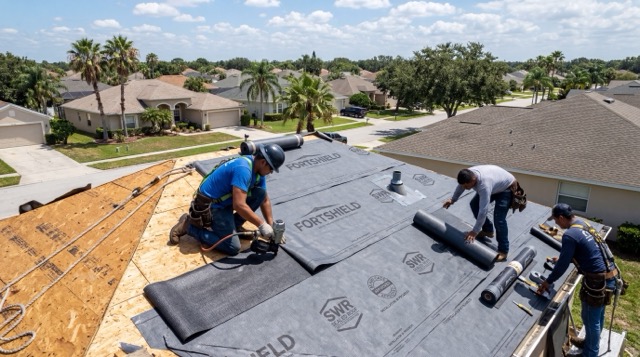
Sealed Roof Decks: All new roofing systems must include a sealed roof deck — either a self-adhering underlayment or an approved secondary water barrier applied directly to the plywood or OSB decking. This isn’t new for high-wind zones, but the 9th Edition expands and tightens the requirements across more areas of the state.
Enhanced Roof-to-Wall Connections: The code raises the bar on how roof trusses connect to wall framing. For Brandon homes built in the 1970s through 1990s, this is significant. Many of those homes use basic toe-nail connections that don’t meet the new standard. Under a separate scope-of-work change, licensed roofing contractors can now perform roof-to-wall connection enhancements — previously, that work sometimes fell into a gray area between roofing and structural trades.
R-20 Attic Insulation: For unvented attic assemblies, the code now requires R-20 insulation. This affects homes using spray foam or rigid insulation at the roof deck rather than traditional blown-in insulation on the attic floor.
Revised 25% Replacement Rule: This is the change that affects the most homeowners. Previously, if more than 25% of your roof area was damaged or being replaced, the entire roof had to be brought up to current code. The new code allows partial replacement if the remaining structure already meets 2007 or newer standards.
New Flashing Requirements: Updated standards for flashing at penetrations, valleys, and wall-to-roof transitions. More explicit language around step flashing, counter flashing, and kick-out diverters.
Lightning Protection Provisions: New provisions address lightning protection systems as they interact with roofing installations — routing, attachment, and clearance requirements.
How Does the Revised 25% Rule Affect Brandon Roof Repairs?
The 25% rule has been one of the most frustrating rules for Florida homeowners. Under the current code, if storm damage or deterioration affects more than 25% of your total roof area, you can’t just fix the damaged section. The entire roof must be torn off and replaced to meet whatever building code is current at the time.
The 2026 revision adds an important exception. If the undamaged portion of your roof was originally built to 2007 Florida Building Code standards or newer, you can repair just the damaged section without triggering a full replacement.
For Brandon, this matters a lot. The community has a wide range of housing stock. Homes in older sections of Brandon — especially those built in the late 1970s and 1980s along areas near Bloomingdale and Riverview — won’t benefit from this change because they predate the 2007 code. But homes built after 2007 in newer developments in Valrico, FishHawk, and eastern Brandon could see real savings if they need partial roof repairs.
The key detail: your contractor and the Hillsborough County building department make the determination together. Your contractor measures the damaged area, submits the permit application, and the AHJ (Authority Having Jurisdiction) decides whether the 25% threshold has been exceeded and whether the exception applies.
What Do Sealed Roof Deck Requirements Mean for Your Brandon Home?
A sealed roof deck is a secondary layer of water protection applied directly to your roof’s plywood or OSB sheathing before any shingles, tiles, or metal panels go on top. Think of it as a waterproof backup — if your roof covering gets torn off during a hurricane, the sealed deck keeps rain out of your house.
The 9th Edition tightens requirements for how this layer is installed and inspected. The dry-in stage — when the sealed deck is complete but before the final roof covering is applied — now requires a more formal inspection process. The building department wants to see the SRD (secondary water resistance) in place and properly installed before anything covers it up.
This matters because sealed roof decks have reduced water damage claims by roughly 60% in homes that experienced partial roof loss during recent hurricanes. That’s not a small number. For Brandon homes that sit in Hillsborough County’s hurricane exposure zone, this upgrade is arguably the most important change in the new code.
If you’re getting a new roof in Brandon after December 31, 2026, expect your contractor to include SRD as a standard part of the job. This adds some cost to the project, but the insurance premium reduction and storm protection far outweigh the expense.
Should Brandon Homeowners Replace Their Roof Before or After the Code Change?
This is the practical question everyone asks. The answer depends on your situation.
Projects permitted before December 31, 2026 follow the current 8th Edition code. Projects permitted after that date must meet the new 9th Edition standards. So the code that applies to your project is determined by your permit date, not your construction date.
If your Brandon home needs a roof replacement and you’re already planning the work, permitting before the deadline means potentially lower material and labor costs since the new SRD and connection requirements add to the scope. For a typical 2,000-square-foot home in Brandon, the additional code requirements could add $1,500 to $3,000 to the project.
But here’s the other side: a roof built to the new code is more storm-resistant, more insurable, and more valuable when you sell. If you’re replacing your roof anyway, building to the higher standard is often worth the extra cost.
The worst position is waiting until late November to decide. Hillsborough County permitting takes time, and roofing contractors in Brandon are booked weeks or months out. If timing matters to you, start the conversation now — whether you want to beat the deadline or plan for the new code.
How Do 2026 Code Changes Affect Roof Insurance in Hillsborough County?
In 2026, your roof is the primary factor determining your insurance premium and whether you can get coverage at all. Carriers that returned to the Florida market after recent reforms are being highly selective about which homes they’ll write policies for. A code-compliant roof is the price of entry.
Roofs built to the 9th Edition code will check more boxes on a wind mitigation inspection. Sealed roof decks, enhanced connections, and proper flashing all contribute to better wind mitigation credits. For Brandon homeowners, that translates to lower premiums — often hundreds of dollars per year.
Non-compliant roofs face the opposite problem. As the market moves toward stricter underwriting, homes with older roofs that don’t meet modern standards become harder and more expensive to insure. This isn’t speculation — it’s already happening across Hillsborough County.
The code change also affects home values. Buyers and their inspectors will be comparing your roof against the 9th Edition standard. A roof that was permitted under the old code isn’t necessarily a problem, but a roof that clearly falls below modern standards is a negotiating point.
What SCM Roofing Recommends
Brandon has a lot of homes built in the 1980s and 1990s — CBS construction with low-pitch roofs, many still on their original or second roof system. For those homeowners, the 2026 code changes are a reason to plan ahead, not panic.
At SCM Roofing, we’re already building to 9th Edition standards on projects where it makes sense. Sealed roof decks, hurricane straps, proper flashing — this is how we’ve been doing roofs for years. The new code catches up to what good contractors were already doing.
As a GAF Master Elite certified contractor, we stay current with every code change and pull all permits through Hillsborough County. That means the building department inspects every phase of the project, and your roof is documented as code-compliant from day one.
Whether you want to permit before the deadline or plan a project that meets the new standard, the first step is the same: get an honest assessment of your current roof and understand your options. SCM Roofing provides that assessment at no cost across Brandon, Riverview, Valrico, and all of Hillsborough County.
---
Frequently Asked Questions
Q: When does the 2026 Florida Building Code take effect for roofing in Brandon?
A: The 9th Edition Florida Building Code takes effect on December 31, 2026. Any roofing project permitted after that date in Brandon and all of Hillsborough County must meet the new standards, including sealed roof deck requirements and enhanced connection standards.
Q: How much more does a code-compliant roof cost in Hillsborough County?
A: The additional requirements in the 2026 code — primarily sealed roof decks and enhanced fastening — typically add $1,500 to $3,000 to a standard residential reroof in the Brandon area. The exact cost depends on your home’s size, roof complexity, and existing conditions.
Q: Can I still get my Brandon roof repaired without a full replacement under the new code?
A: Yes, and the new code actually makes this easier in some cases. The revised 25% rule allows partial roof repairs without triggering a full replacement if the remaining structure meets 2007 or newer Florida Building Code standards. For newer Brandon homes built after 2007, this is a meaningful cost savings.
Q: What is a sealed roof deck and does my Brandon home need one?
A: A sealed roof deck is a waterproof membrane applied directly to your roof’s plywood sheathing before the shingles or tiles are installed. It acts as a backup water barrier if the roof covering blows off during a storm. After December 31, 2026, any new roof in Brandon will require a sealed roof deck that meets 9th Edition standards.
Q: Should I replace my roof before the 2026 code changes take effect?
A: It depends on your roof’s current condition. If your Brandon home needs a replacement anyway, permitting before December 31 could save $1,500 to $3,000 in additional code requirements. However, a roof built to the new standard is more storm-resistant and may qualify for better insurance rates. Talk to a licensed contractor about which approach makes more sense for your situation.
---
Key Takeaways
- Florida’s 9th Edition Building Code takes effect December 31, 2026, with significant roofing changes including sealed roof decks, enhanced connections, and a revised 25% replacement rule.
- Brandon homes built after 2007 may benefit from the revised 25% rule, which allows partial roof repairs without triggering a full replacement.
- Projects permitted before December 31 follow the current code; projects permitted after follow the new standard — plan your timeline accordingly.
- A roof built to 2026 code standards is more storm-resistant, more insurable, and adds value to your Hillsborough County home.
---
Planning a roof replacement in Brandon before the code changes? SCM Roofing provides free estimates across Hillsborough County. Call us at 855-SCM-ROOF or request an appointment online.