Cool Roof Systems in Clearwater: How Reflective Roofing Cuts Energy Bills by 25%
Cool roof systems are roofing solutions designed to reflect sunlight and emit absorbed heat back into the atmosphere, significantly reducing the amount of thermal energy transferred into your home. In Clearwater, where summer cooling costs routinely exceed $350–$400 per month, upgrading to a reflective cool roof can slash air conditioning expenses by 15–25%, translating to $600–$1,200 in annual savings for the average household. A cool roof works by using high-solar-reflectance materials and high-thermal-emittance coatings that keep roof surface temperatures 30–50°F cooler than conventional dark roofing, reducing attic temperatures, lowering HVAC strain, and extending air conditioning unit lifespan. At SCM Roofing, we've installed hundreds of cool roof systems across Clearwater and Pinellas County, and the consistent feedback from homeowners is simple: cooler homes, lower bills, and peace of mind knowing they've made a smart long-term investment in energy efficiency and sustainability.
Table of Contents
1. What Makes a Roof "Cool" and Why Does It Matter in Clearwater? 2. How Reflective Roofing Cuts Your Cooling Costs 3. Which Roofing Materials Offer the Best Energy Savings? 4. Understanding Solar Reflectance, Thermal Emittance, and SRI Ratings 5. What SCM Roofing Recommends for Clearwater Homes 6. Frequently Asked Questions 7. Key Takeaways
What Makes a Roof "Cool" and Why Does It Matter in Clearwater?
A cool roof is any roofing system with high solar reflectance (the ability to reflect sunlight) and high thermal emittance (the ability to radiate absorbed heat back into the atmosphere). Unlike conventional dark-colored shingles that absorb more than 80% of the sun's energy, cool roofs reflect 60–75% of solar radiation away from your home and efficiently radiate any absorbed heat instead of trapping it.
In Clearwater, the Pinellas Peninsula experiences some of Florida's most intense summer heat. From June through September, afternoon temperatures regularly exceed 90°F, with rooftop temperatures on conventional dark shingles climbing well above 130°F. Your attic becomes an oven. That heat radiates downward through the roof deck, into the insulation layer, and into the living spaces below. Your air conditioning system works overtime to maintain 72°F indoors while the attic is cooking at 140°F+. That's a 68-degree temperature differential driving continuous cooling demand and higher electric bills.
A reflective cool roof keeps the roof surface temperature closer to 100–105°F on the same 90°F day. The difference is dramatic: a 30–50°F cooler roof surface translates directly to a cooler attic, less strain on your HVAC system, and measurable reduction in monthly cooling costs. For Clearwater homeowners spending $3,912 per year on electricity (47% above the U.S. average), that efficiency gain matters.
How Reflective Roofing Cuts Your Cooling Costs
The energy savings from a cool roof in Clearwater come from three interconnected mechanisms:
Reduced Attic Heat Gain
A conventional dark roof allows attic temperatures to climb to 150°F+ on summer afternoons. A reflective cool roof keeps the same attic 20–40°F cooler. That reduction in attic temperature directly lowers the temperature gradient between indoors and your attic, reducing the rate at which heat conducts through insulation and into living spaces. Less heat entering the home means less cooling load on your air conditioning system.
Lower HVAC Demand and Runtime
When your air conditioner doesn't have to fight a super-heated attic, the system runs shorter cycles at lower capacity. That translates to:
- Lower monthly energy consumption (15–25% reduction in cooling costs is typical for cool roof upgrades)
- Extended equipment lifespan (less wear and tear on the compressor and motor)
- More consistent indoor temperature control
- Lower strain on the electrical panel during peak summer demand
Accelerated Heat Radiation
Cool roofs don't just avoid absorbing heat—they actively radiate it. Thermal emittance allows the roof material to emit infrared radiation (heat) back to the sky, especially during night hours. This passive cooling effect continues 24/7, reducing peak attic temperatures and helping your home shed heat naturally, even when outdoor air temperature remains high.
Real-World Clearwater Numbers:
The average Clearwater household uses 1,786 kWh of electricity per month and pays $326/month for electricity at an average rate of 18¢/kWh. A 20% reduction in cooling energy use (a conservative estimate for a cool roof upgrade combined with proper attic insulation) eliminates roughly 357 kWh per month, saving $64/month or $768 per year. Over a 20-year roof lifespan, that's $15,360 in cooling cost savings, often covering the cost difference between a standard roof and a cool roof system multiple times over.
Which Roofing Materials Offer the Best Energy Savings?
Not all cool roofs are created equal. Different materials offer varying levels of reflectivity, durability, and cost-effectiveness for Clearwater homes.
Cool Reflective Shingles (GAF Timberline HDZ Reflector Series)
GAF Timberline HDZ Reflector Series shingles represent the latest in reflective roofing technology. These high-definition laminated shingles feature enhanced EcoDark Granule technology, allowing them to maintain deep, rich colors (including Charcoal) while still achieving high solar reflectance and thermal emittance ratings. The Timberline HDZ Reflector Series is designed to meet California Title 24 cool roof standards and can reduce roof surface temperatures by up to 20°F compared to traditional dark shingles.
For Clearwater homeowners, the appeal is clear: you get the aesthetic benefits of traditional asphalt shingles in colors that match your home, but with reflective properties that cut cooling costs. GAF, as a Master Elite certified manufacturer, backs these shingles with industry-leading warranties.
Cool Metal Roofing
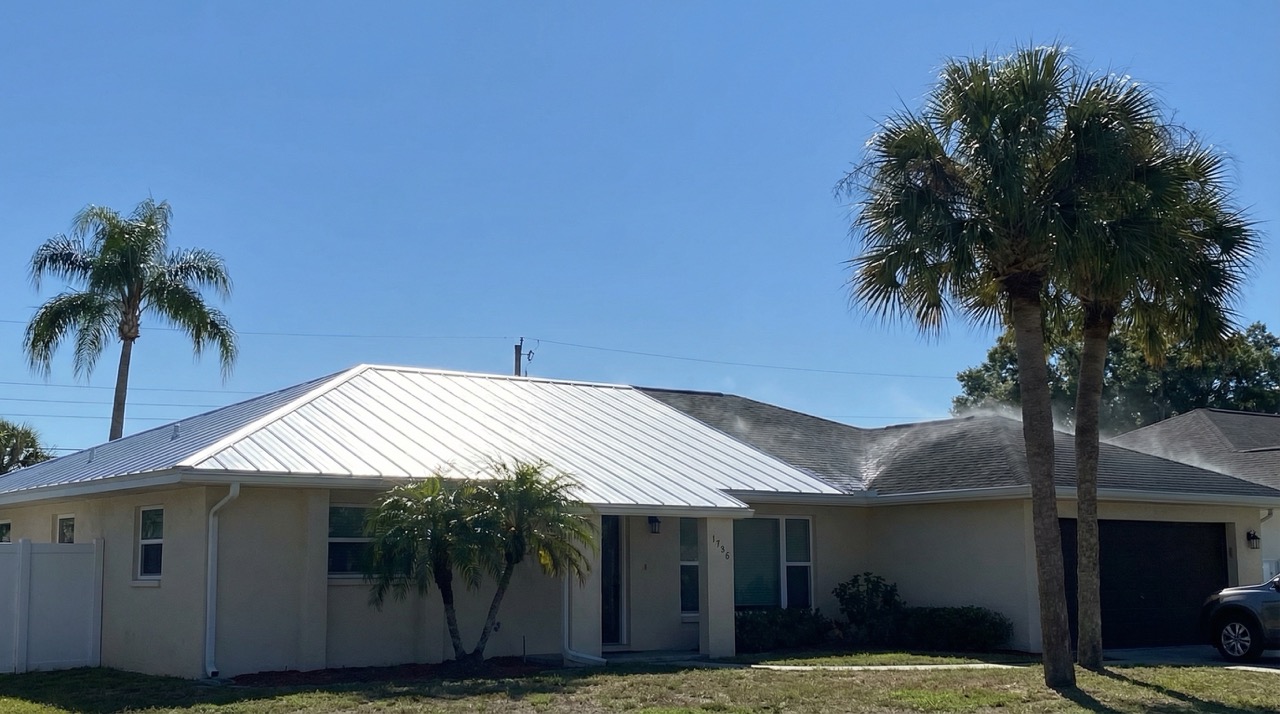
Light-colored metal roofing with reflective finishes delivers the highest solar reflectance values (often 0.65–0.80) and is popular in hotter regions. Metal roofs are durable (25–50-year lifespan), lightweight, and can be engineered with thermal breaks to prevent heat conduction. However, metal roofing is more expensive upfront and is less common in Clearwater's traditional single-story ranch and concrete-block residential neighborhoods.
Cool Roof Coatings
Elastomeric coatings applied over existing roofing membranes can boost reflectivity for flat or low-slope roofs. These coatings are less visible on residential pitched roofs but are an excellent retrofit option if you want to extend the life of an existing roof while improving energy efficiency.
Understanding Solar Reflectance, Thermal Emittance, and SRI Ratings
To confidently compare cool roof products, you need to understand three key metrics:
Solar Reflectance (SR)
Solar reflectance measures how much of the sun's energy a roof surface reflects back to the atmosphere. It ranges from 0 (a black surface that absorbs nearly all energy) to 1 (a perfectly white surface that reflects nearly all energy). A conventional dark roof has an SR of 0.05–0.15. A reflective cool roof typically has an SR of 0.55–0.80.
The higher the SR value, the more energy is reflected away and the cooler the roof stays.
Thermal Emittance (TE)
Thermal emittance measures how efficiently a surface radiates heat (infrared radiation) back to the sky. It also ranges from 0 to 1, with 1 being the most efficient. Most roofing materials, whether light or dark, have high thermal emittance (0.75–0.95). This is why both light and darker reflective shingles can qualify as cool roofs if they have high SR and TE ratings.
Solar Reflectance Index (SRI)
The Solar Reflectance Index combines SR and TE into a single number (0–100) that's easier for homeowners to understand. A standard black roof has an SRI of 0. A standard white roof has an SRI of 100. Cool roof shingles typically have SRI ratings of 64–85. Florida's 2026 energy code requires a minimum aged SR of 0.55 and minimum aged TE of 0.75, or a minimum aged SRI of 64 for low-sloped roofs (requirements effective June 2026).
When evaluating cool roof options, ask your contractor for CRRC (Cool Roof Rating Council) rated products with published SRI values. This transparency allows you to compare products objectively.
What SCM Roofing Recommends for Clearwater Homes
At SCM Roofing, we've been installing roofs in Clearwater for over 25 years. We're a locally owned GAF Master Elite certified contractor, which means we stay current with the latest materials and meet rigorous quality standards.
For cool roof energy savings in Clearwater, we recommend:
Primary Recommendation: GAF Timberline HDZ Reflector Series
For most Clearwater homeowners, the Timberline HDZ Reflector Series offers the best balance of energy savings, aesthetic appeal, durability, and cost. These shingles deliver measurable cooling benefits (20°F+ reduction in roof surface temperature), come in colors that look like traditional asphalt shingles, and carry excellent warranties. They comply with Florida's 2026 energy code cool roof requirements and pair beautifully with Clearwater's traditional residential architecture.
Installation Best Practices:
Beyond material selection, we ensure proper installation practices that maximize cool roof benefits:
- Attic Ventilation: Proper soffit-to-ridge ventilation reduces attic temperature and prevents moisture buildup.
- Air Sealing: Florida's 2026 energy code requires sealed roof decks and air sealing to reduce conditioned air loss. We use high-quality underlayment and detail all penetrations to minimize air leakage.
- Insulation Assessment: Many Clearwater homes benefit from adding or upgrading attic insulation to R-30 or higher, which works synergistically with a cool roof to maximize energy savings.
- Blower Door Testing: We can arrange post-installation blower door testing to verify air sealing quality and confirm compliance with Florida's 2026 air leakage limits (no more than 7 air changes per hour).
Cost and Payback:
A typical Clearwater home requiring a 2,000–2,500 sq. ft. roof will see a cost premium of $800–$1,500 for cool roof shingles versus standard shingles. Given annual cooling savings of $600–$1,200, most homeowners recover the upgrade cost in 1–2 years, with benefits extending across the 25+ year life of the roof.
Frequently Asked Questions
Q: How much can I save by switching to a cool roof in Clearwater?
A: Savings depend on your current roof color, home size, insulation level, and air conditioning efficiency. Most Clearwater homeowners see 15–25% reductions in cooling energy use, translating to $600–$1,200 annually. Over a 25-year roof lifespan, cumulative savings often exceed $15,000–$25,000. To get a personalized estimate for your home, call SCM Roofing at 855-SCM-ROOF (855-726-7663) for a free energy assessment.
Q: Will a light-colored cool roof look okay on my Clearwater home?
A: Modern cool roof shingles like GAF Timberline HDZ Reflector Series come in rich, dark colors including Charcoal, Weathered Wood, and Slate—not just white. You get the energy benefits of reflectivity with the traditional aesthetic of a dark-colored roof. Reflective granule technology lets manufacturers achieve high solar reflectance (SR) and thermal emittance (TE) ratings even in darker shades.
Q: Does Florida's 2026 energy code require a cool roof?
A: Florida's 2026 building code (effective June 2026) requires cool roofs for low-sloped roofs: minimum aged SR of 0.55, minimum aged TE of 0.75, or minimum aged SRI of 64. For pitched residential roofs like single-story Clearwater homes, the code focuses on R-20 attic insulation, air sealing, and sealed roof decks. While cool roof shingles are not mandated for pitched residential roofs, they are a smart voluntary upgrade that qualifies you for the 2026 standards and delivers immediate energy savings.
Q: How long do cool roof shingles last in Clearwater's heat and humidity?
A: High-quality cool roof shingles like GAF Timberline HDZ are engineered for durability in hot, humid climates. They typically last 25–30 years with proper installation and maintenance. The reflective granules don't degrade faster than standard granules; in fact, by keeping the roof cooler, reflective shingles may extend shingle life by reducing thermal stress and UV degradation.
Q: What's the difference between a cool roof and standard dark shingles?
A: A standard dark roof absorbs 80%+ of solar energy, reaching surface temperatures of 150°F+ on Clearwater summer days. A cool roof reflects 60–75% of solar energy and radiates absorbed heat efficiently, staying 30–50°F cooler. That temperature difference translates to lower attic heat, reduced air conditioning demand, and lower monthly electric bills. Cool roofs are designed specifically for solar reflectance and thermal emittance; dark shingles prioritize aesthetics over energy efficiency.
Q: When should I consider a cool roof upgrade for my Clearwater home?
A: Consider a cool roof if: (1) your current roof is 15+ years old or nearing replacement, (2) your summer air conditioning bills exceed $300/month, (3) your attic temperature exceeds 130°F (you can measure this during a home energy audit), or (4) you're planning a full roof replacement anyway. A cool roof upgrade adds 5–15% to the cost of a new roof but pays for itself through energy savings in 1–3 years, making it one of the highest-ROI home improvements available in Clearwater.
Key Takeaways
- Cool roofs reflect 60–75% of solar energy compared to conventional dark roofs that absorb 80%+, reducing roof surface temperatures by 30–50°F on Clearwater summer days.
- Clearwater cooling costs are 47% above the U.S. average ($326/month, $3,912/year), making energy-efficient roofing a high-priority upgrade for homeowners.
- A cool roof can reduce cooling energy by 15–25%, saving the average Clearwater household $600–$1,200 annually and $15,000+ over the roof's lifespan.
- GAF Timberline HDZ Reflector Series shingles deliver high solar reflectance and thermal emittance ratings in traditional dark colors, meeting Florida's 2026 energy code requirements while maintaining aesthetic appeal.
- Solar reflectance (SR), thermal emittance (TE), and SRI ratings are the key metrics for comparing cool roofs. Florida's 2026 code requires SR >= 0.55, TE >= 0.75, or SRI >= 64 for new low-sloped roofs.
- Proper installation—air sealing, attic ventilation, and adequate insulation—is essential to maximizing cool roof energy savings and meeting Florida's updated building code standards.
- A cool roof upgrade pays for itself in 1–2 years through energy savings, making it one of the most cost-effective home improvements for Clearwater homeowners.
Ready to Cut Your Clearwater Cooling Bills?
SCM Roofing is a locally owned, GAF Master Elite certified contractor serving Clearwater and Pinellas County for over 25 years. We specialize in high-efficiency cool roof systems designed for Florida's hot, humid climate. Whether you're planning a full roof replacement or investigating energy-saving options, our team can assess your home's roofing and insulation needs, explain cool roof options, and deliver transparent pricing.
Call us today for a free consultation and energy assessment:
855-SCM-ROOF (855-726-7663)
Visit us online: scmroofingfl.com