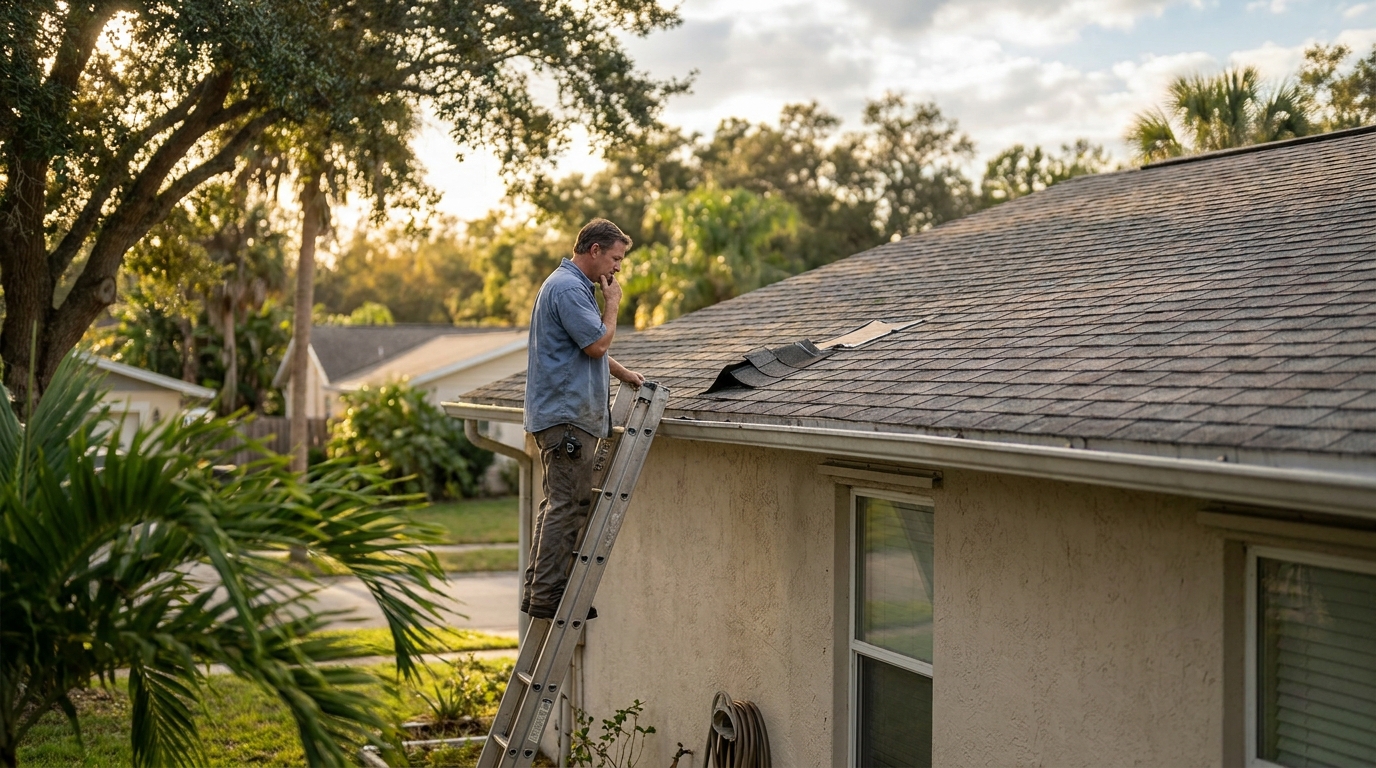
Standing in your Tampa driveway after another summer thunderstorm, staring up at missing shingles or a suspicious dark patch, you're facing one of the most common — and most expensive — questions in homeownership: do you patch what's broken, or commit to a full roof replacement?
It's not a small decision. In a market like Tampa, where afternoon downpours, salt air off the bay, and hurricane season put roofs through more punishment than almost anywhere in the country, getting this call right matters. Repair the wrong roof and you'll throw good money at a system that fails again next storm. Replace one that had years left and you've spent tens of thousands of dollars early. This guide walks you through the repair vs replace roof decision the way a seasoned local contractor would — with honest criteria, Tampa-specific context, and no scare tactics.
The Core Question: How Much Life Is Left in the Roof?
Every roof repair-or-replace decision comes back to one underlying question: is this roof in the early or middle stretch of its useful life, or is it near the end? Localized damage on a healthy roof is almost always worth repairing. Localized damage on a roof that's already nearing the end of its lifespan is usually the first symptom of broader failure — and patching it just delays the inevitable.
Constant UV exposure, humidity, wind-driven rain, and the occasional hurricane all accelerate wear. Tile and metal roofs last longer, but their underlayment — the waterproof layer beneath — often fails first, particularly on older homes throughout the Tampa Bay area.
When to Repair Your Roof
Repair is usually the right call when the damage is isolated, the rest of the roof is in good shape, and you're well within the expected service life of the system. Specific scenarios where repair makes sense:
- A small number of missing or damaged shingles after a wind event, with no underlying decking damage
- A single localized leak traced to flashing around a chimney, vent boot, or skylight
- Granule loss in one area without widespread bald spots elsewhere
- Damaged tiles on an otherwise sound tile roof with intact underlayment
The repair just needs to be done correctly — matching materials, proper flashing technique, and integration with the surrounding shingles or tiles.
When to Replace Your Roof
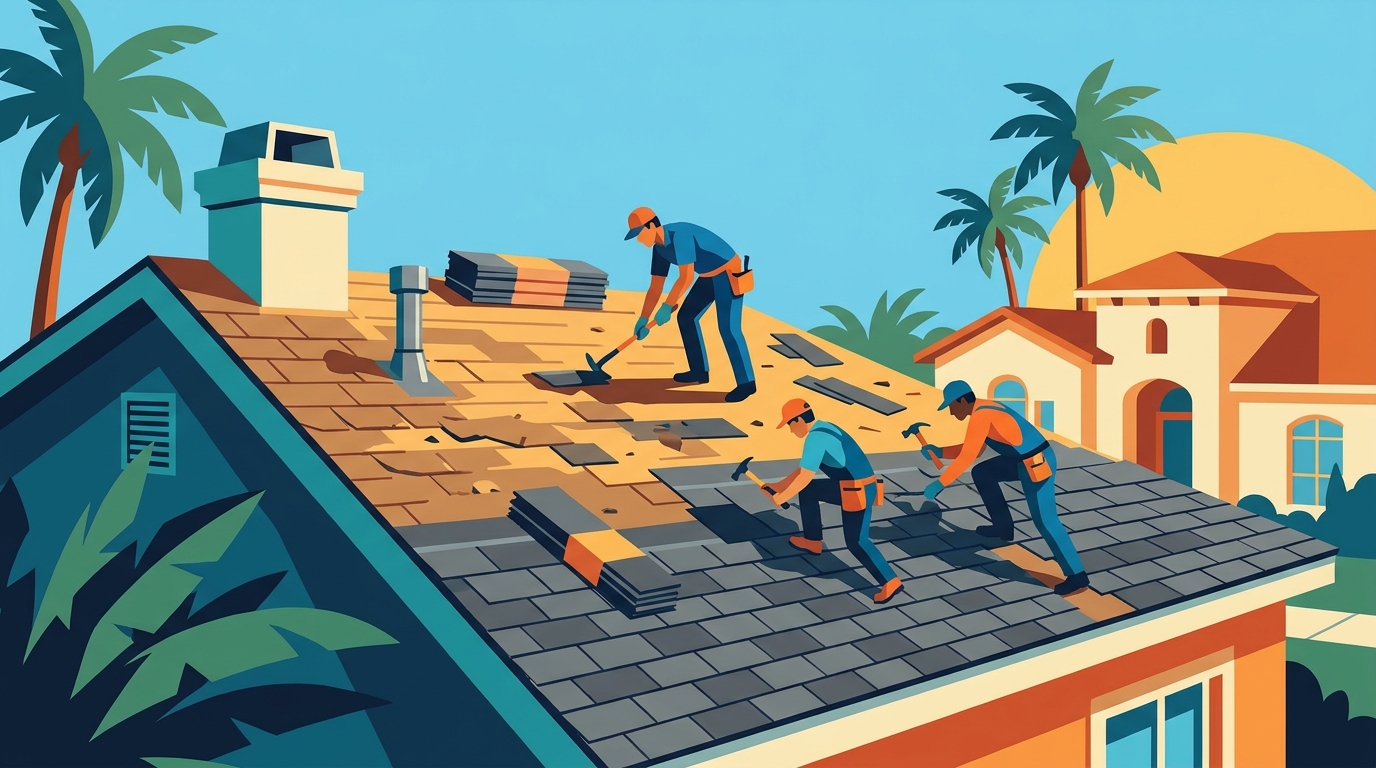
Replacement becomes the smarter long-term investment when you start seeing systemic signs of failure rather than isolated damage. Watch for these indicators:
- Multiple leaks in different areas — a sign the underlayment is failing broadly, not in one spot
- Widespread granule loss visible in gutters or as bald patches on shingles
- Sagging rooflines indicating decking or structural issues underneath
- Curling, cupping, or cracking shingles across large sections of the roof
- Insurance non-renewal notices tied to roof age or condition
That last point has become a major factor in the repair vs replace roof decision across Tampa. Florida's insurance market remains tight in 2026, and many carriers continue to refuse renewal on policies covering roofs older than a certain age, regardless of condition. If your insurer has flagged your roof, replacement may be less of a choice and more of a requirement to keep coverage.
Tampa-Specific Decision Factors
Hurricane Season and Permit Requirements
Timing matters here. Hurricane season brings a compressed window for scheduling replacements, and trying to arrange a full re-roof during an active storm watch is a logistical headache. The smart move is to address marginal roofs in spring or early summer, before peak season. Local jurisdictions require permits for both repairs and full replacements, and replacements must comply with current Florida Building Code wind-uplift standards. A reputable contractor will pull the permit and pass inspections — never accept a bid that skips this step. A reputable contractor will pull the permit and pass inspections — never accept a bid that skips this step.
The 25% Rule
Florida historically had a building code provision sometimes called the "25% rule," which triggered full replacement requirements once a certain portion of a roof was being repaired or replaced within a set period. State legislation has modified how this applies, particularly for roofs built to current Florida Building Code standards. Because the application can be nuanced and depends on your roof's age and original construction, this is a question to ask any contractor providing a repair estimate — they should be able to tell you exactly how the rule applies to your specific home.
Insurance and the 4-Point Inspection
If you've owned your Tampa home for any length of time, you're familiar with the 4-point inspection — and the roof section is usually the deciding factor. Insurers want to see meaningful remaining useful life in the roof. If your roof won't pass that threshold, replacement isn't optional if you want to stay insured.
Cost Considerations
Repairs in the Tampa market typically range from a few hundred dollars for a small fix to several thousand for more involved work. Full replacements vary widely based on roof size, pitch, material, and tear-off complexity, but most single-family homes fall in a range that's substantial enough to warrant getting multiple detailed estimates.
Here's where homeowners often go wrong: choosing the cheapest bid. Roofing is one of those trades where the gap between a competent installation and a poor one isn't visible until the next big storm. Look for GAF Master Elite certification, manufacturer warranties that transfer with the home, and clear written scopes of work. As one customer wrote after comparing several bids, SCM Roofing was "reasonably priced (though they were not the lowest)" — and that's often the right zone to be in.
How to Evaluate a Contractor's Recommendation
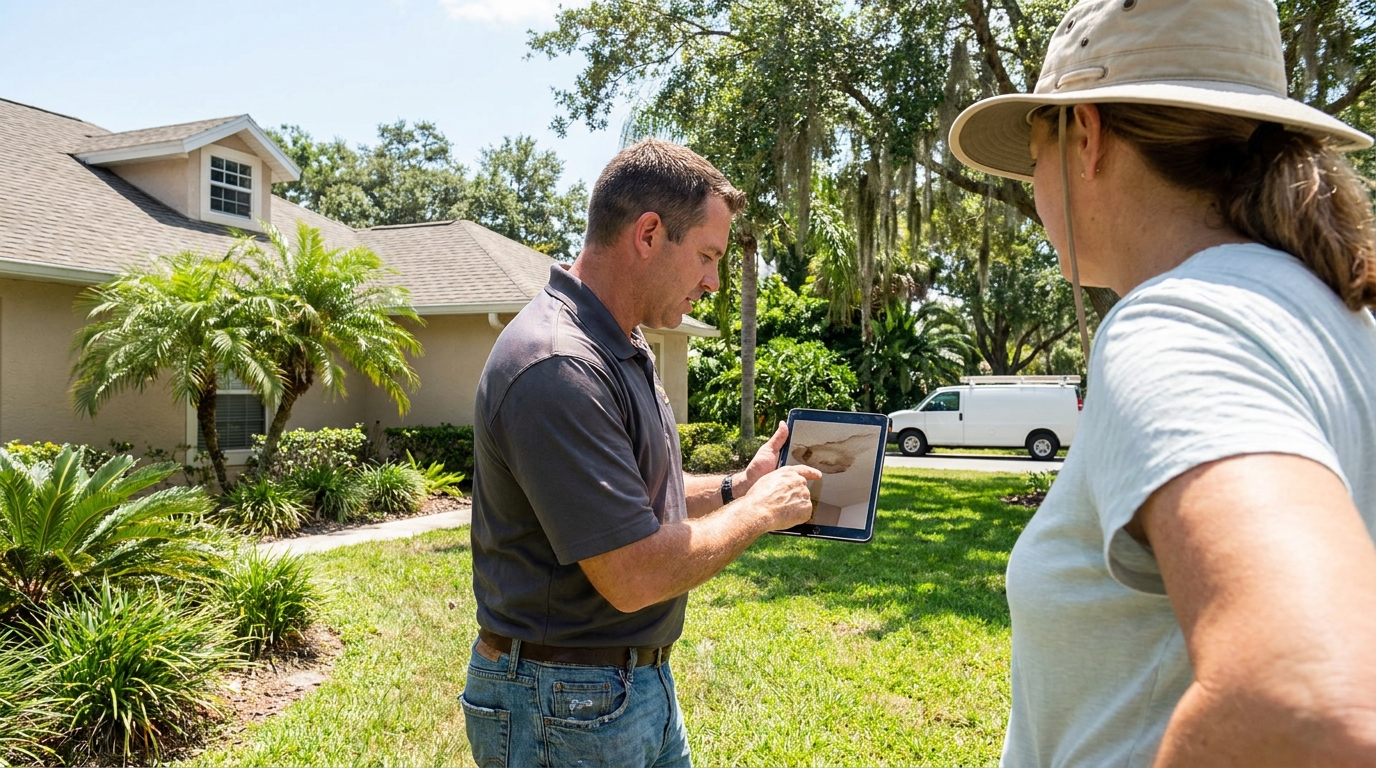
When a contractor inspects your roof, the recommendation should come with evidence. Photos of the actual damage. A clear explanation of what's failing and why. An honest assessment of the roof's overall condition, not just the immediate problem. If someone tells you to replace without showing you specific evidence, get another opinion. If someone tells you to repair without acknowledging the roof's age and broader condition, get another opinion there too.
SCM Roofing, LLC, a GAF Master Elite contractor serving the Tampa Bay area, works through this evaluation with homeowners using on-roof photos and written scopes. One customer described the experience: "We were shown pictures and plans for what our roof needed" — and the crew "worked meticulously together from the start to the finish." That commitment to transparency is reflected in the company's 4.9-star rating across more than 239 Google reviews, as of April 2026.
Frequently Asked Questions
How long should a roof last in Tampa?
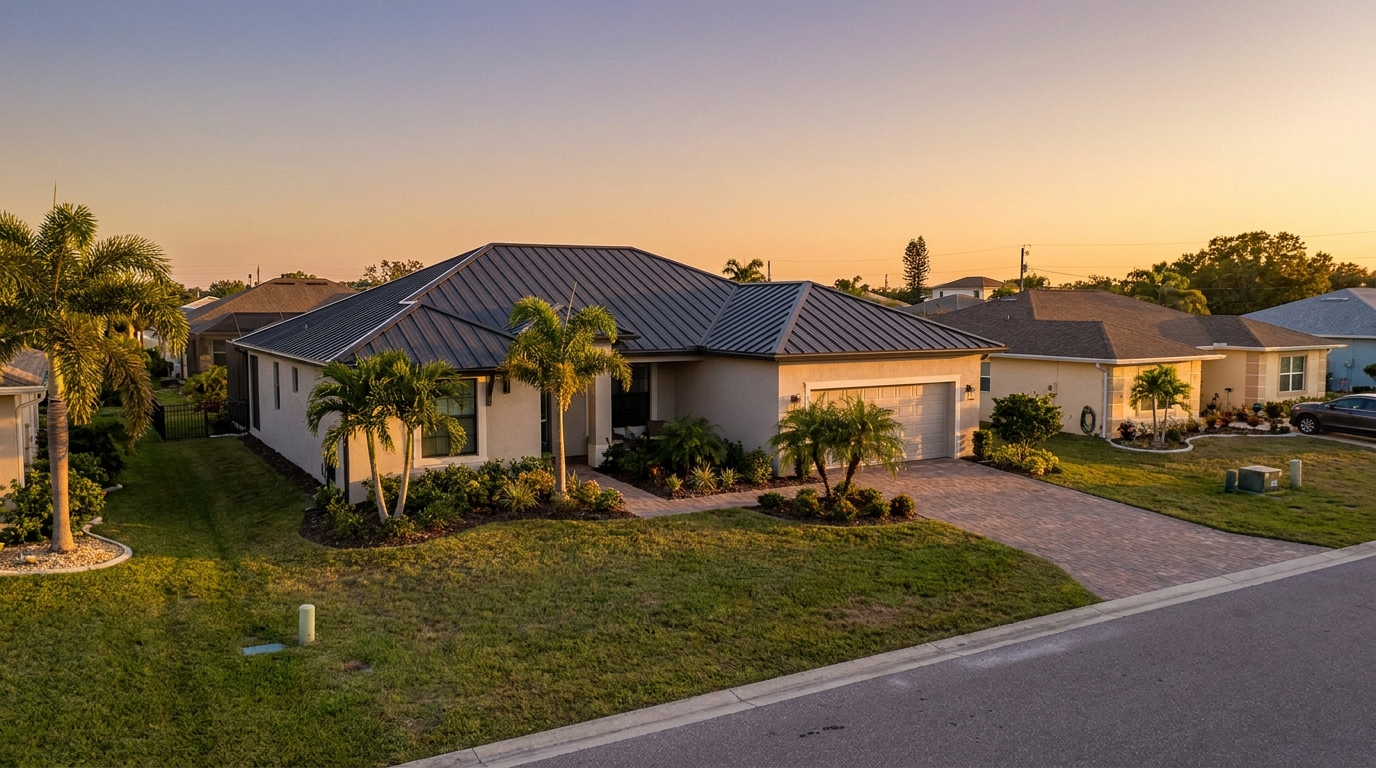
Asphalt shingle roofs in the Tampa climate have a shorter lifespan than national averages, depending on quality of materials and installation. Tile roofs can last considerably longer than asphalt shingles, though their underlayment typically needs replacement well before the tile itself wears out.
Will my insurance cover a roof replacement?
It depends on the cause. Storm and hurricane damage are typically covered, subject to your deductible and policy terms. Wear and age are not. A licensed contractor can help document storm-related damage for a claim.
Can I just replace part of my roof?
Sometimes, but Florida's building code provisions around partial replacement are nuanced. A contractor familiar with Hillsborough County permitting can tell you exactly what's allowed for your specific roof.
How long does a full replacement take?
Most single-family homes in Tampa can be torn off and re-roofed in a matter of days, weather permitting. Tile and metal installations take longer.
What role does Florida's insurance market play in the repair vs. replace decision in 2026?
Florida's insurance environment continues to be a decisive factor. Many carriers in 2026 still decline to renew policies on roofs past a certain age or condition threshold. If your insurer has issued a non-renewal notice tied to your roof, replacement is often mandatory to maintain coverage — making the financial comparison between repair and replacement less relevant than staying insured.
Is it worth repairing a roof before selling a Tampa home?
It depends on the roof's remaining life. Buyers and their insurers will scrutinize the 4-point inspection, and a roof that won't pass can derail a sale or force a price reduction. If the roof has 5 or more years of life and the damage is contained, a documented repair can satisfy buyers. A roof near end-of-life is usually better replaced — it strengthens the listing and removes a major negotiating liability.
Making the Call
The repair vs replace roof decision isn't really about the damage in front of you — it's about the system as a whole, your timeline in the home, your insurance situation, and the realities of Tampa's climate. A good contractor will walk you through all of those factors honestly, even when the honest answer is "this can wait another two years."
Homeowners in Tampa who want a thorough inspection and a straight answer can contact SCM Roofing, LLC at https://scmroofingfl.com or call (855) 726-7663 for a free estimate. Whether the right answer turns out to be a targeted repair or a full replacement, you'll get the evidence and explanation you need to decide with confidence.
"