If you own a home in Bradenton, you already know the rhythm of summer: the afternoon thunderheads building over the Gulf, the humidity that settles in by May, and the quiet pressure that comes with watching the National Hurricane Center map every morning. Hurricane season arrives each summer, and your roof is the single most exposed system on your property when a named storm tracks toward Manatee County. A focused pre-season inspection is the highest-leverage hour you can spend before the first cone of uncertainty crosses Anna Maria Island.
This checklist is built specifically for Bradenton's coastal Gulf Coast climate, the housing stock common across neighborhoods like Riverview Boulevard, Palma Sola, West Bradenton, and the newer subdivisions east of I-75. Use it as a walk-through guide, then decide whether you can handle what you find or whether it's time to bring in a licensed roofer.
Why Hurricane Roof Preparation in Bradenton Matters
Bradenton sits on the Gulf side of the peninsula, which means our roofs face a specific cocktail of stress: salt-laden air, sustained UV exposure, hard tropical downpours, and the periodic threat of Category 3+ wind speeds. The damage path of recent seasons made it clear that even inland Manatee County properties — not just barrier-island homes on Anna Maria or Longboat Key — take significant uplift and wind-driven rain damage when storms track up the coast.
Florida's building code is among the strictest in the country for wind resistance, and Manatee County enforces permit requirements for most roofing work, including re-nailing the deck and installing a secondary water barrier during a full replacement. If your roof was installed before the current code cycle, your underlayment, fastening pattern, and flashing details may not meet today's standards. That's worth knowing before a storm, not after.
Your Pre-Hurricane Roof Checklist
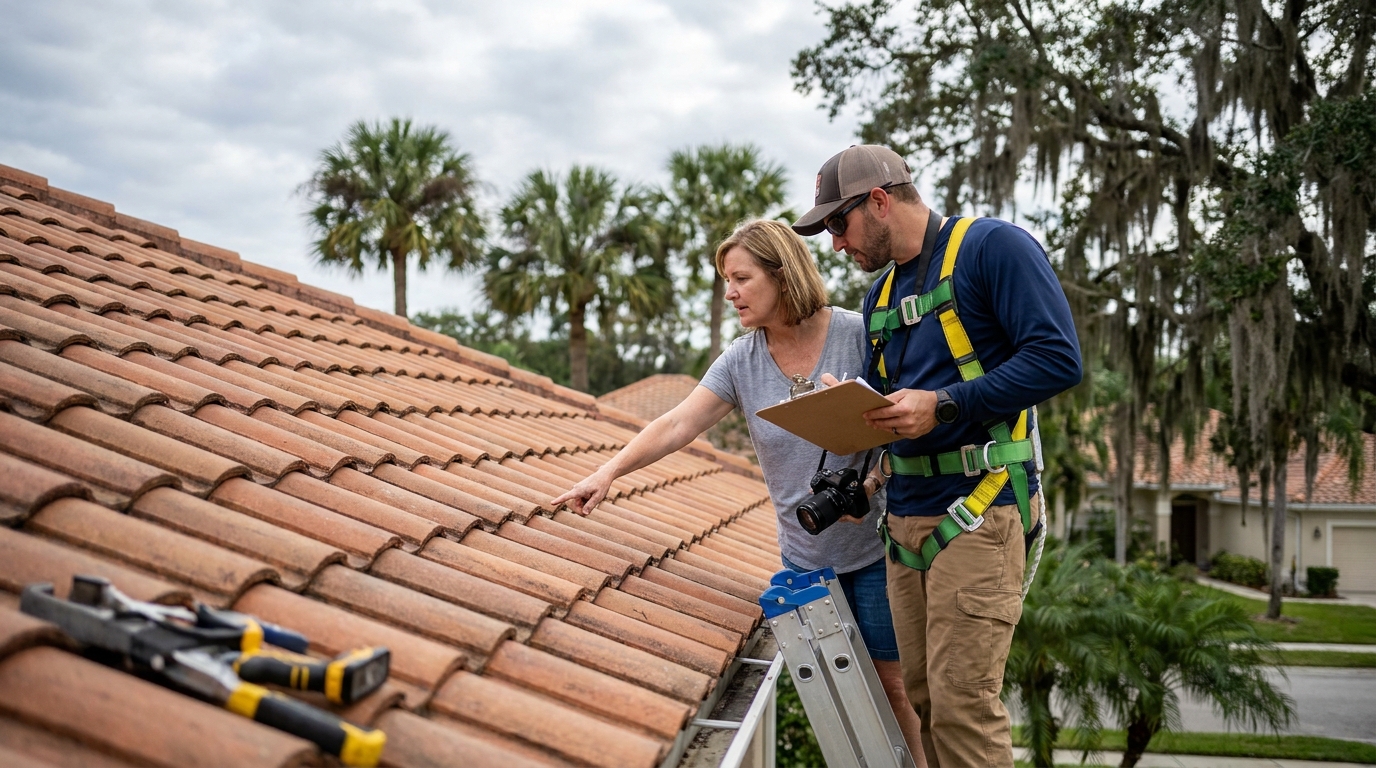
1. Walk the Perimeter from the Ground
Start with binoculars and a slow lap around the house. You're looking for:
- Lifted, curled, or missing shingles, especially along ridgelines and hip seams
- Cracked or slipped tiles on barrel-tile roofs common in older Bradenton neighborhoods
- Dark streaks or sagging areas that suggest trapped moisture
- Exposed nail heads or rust stains running down the slope
- Any daylight visible at the soffit line
Wind uplift almost always starts at an existing weak point. One loose shingle tab on the windward edge is enough to peel a course of shingles during a sustained 90 mph gust.
2. Inspect Flashing, Vents, and Penetrations
Flashing failures cause more hurricane leaks in Bradenton homes than catastrophic shingle loss. Look closely at:
- Step flashing where the roof meets vertical walls (chimneys, dormers, two-story junctions)
- Pipe boots — the rubber collars around plumbing vents crack predictably after years of Florida sun
- Ridge vents and off-ridge box vents for loose fasteners or torn screening
- Skylight perimeters, which expand and contract more than the surrounding roof
- Satellite dish mounts and old antenna penetrations that were never properly sealed
3. Check the Soffits, Fascia, and Drip Edge
Hurricane winds get under your roof through the soffit. Once positive pressure builds in the attic, the entire roof deck wants to lift. Walk the eaves and confirm soffit panels are fully seated in their channels, fascia boards are solid (no soft spots when you press), and drip edge is present and tight along every rake and eave. Vinyl soffit panels that rattle in a normal afternoon breeze will not survive a tropical storm.
4. Clear Gutters and Drainage Paths
A four-inch rainfall in two hours is routine during a Bradenton hurricane. Clogged gutters force water under the drip edge and into the fascia, then the deck. Flush every downspout, confirm splash blocks aren't directing water back toward the foundation, and trim any oak or pine branches that overhang the roof. Falling limbs are the leading cause of impact damage in inland neighborhoods like Braden Woods and River Club.
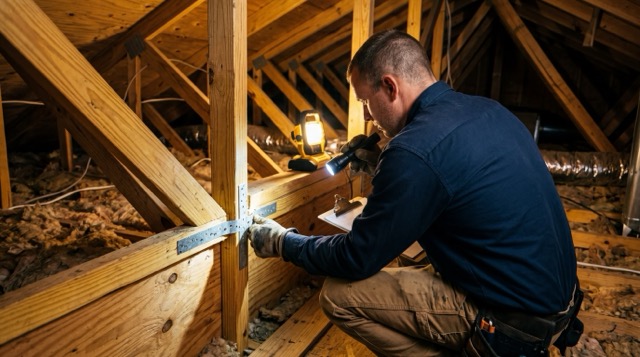
5. Get Inside the Attic
The attic tells you what the roof won't. Bring a flashlight on a dry afternoon and look for:
- Daylight through the deck or at the eaves
- Dark staining around nails (a sign of condensation or active leaks)
- Sagging plywood between trusses
- Damp or compressed insulation
- Any wasp or rodent intrusion at vent openings
6. Verify Hurricane Straps and Deck Attachment
If your home was built or re-roofed to current code, you should have hurricane clips or straps tying the trusses to the top plate, and your deck should be re-nailed accordingly. This isn't something you can confirm casually, but you can check whether you have documentation from your last roof replacement. If you don't, that's a question worth asking a roofer during a pre-season inspection — it also affects your wind mitigation insurance credits. Contact SCM Roofing, LLC at https://scmroofingfl.com if you need a professional to assess your current code compliance.
7. Document Everything
Take dated photos of every slope, every penetration, and the attic interior before the season starts. If you do file a claim later, pre-loss documentation is the single most useful piece of evidence you can hand your adjuster.
When to Call a Professional
A homeowner walk-through catches the obvious. A licensed roofer catches what's hiding: nail pops under the shingle tabs, brittle underlayment, soft decking, undersized flashing, and code deficiencies that became code deficiencies because the rules changed after your roof went on. If your roof is older than 12 years, has never had a documented inspection, or sustained any damage in the last two seasons, a professional pre-hurricane inspection is the right call.
SCM Roofing, LLC is GAF Master Elite Certified — a designation held by only about 2–3% of roofing contractors nationwide — and works throughout Bradenton, Palmetto, Parrish, and the surrounding Manatee County communities. SCM Roofing's inspection process includes a structural assessment, roofing material condition review, past workmanship review, and an attic and interior check, with photo documentation and a written report with prioritized repair recommendations. Customers consistently highlight the team's communication and quality of work. As one customer wrote in a recent review, "I really believe that they treated our roof as if it was their own." With a 4.9-star rating from 239 Google reviews as of April 2026, the team's record speaks for itself.
Frequently Asked Questions
How often should I have my roof inspected in Bradenton?
SCM Roofing, LLC recommends Florida homeowners schedule inspections twice per year — once before hurricane season and once after it ends in November — to catch salt-air corrosion on flashing and fasteners, especially for homes within a few miles of the Gulf.
Does homeowners insurance require a roof inspection?
Florida insurers increasingly request a four-point inspection or a wind mitigation report, especially on older roofs. A current inspection report can also unlock premium credits for features like hurricane clips, secondary water barriers, and a sealed roof deck.
What's the most overlooked item on a pre-hurricane checklist?
Pipe boots and soffit attachment. Both are cheap to fix before a storm and expensive to ignore after one.
Should I tarp my roof before a storm if I find damage?
Only if it's safe and the storm is still days out. A poorly secured tarp becomes a sail. If you find damage close to a named-storm landfall, it's safer to move valuables, document the condition, and call a roofer once the all-clear is given.
What does a professional pre-hurricane roof inspection actually include?
A professional inspection goes well beyond a visual walk-around. SCM Roofing, LLC's inspection covers a structural assessment, roofing material condition review, past workmanship review, and an attic and interior check. You receive photo documentation and a written report with prioritized repair recommendations — giving you a clear action list before the season begins rather than a surprise after a storm.
Does SCM Roofing, LLC offer emergency service if a storm damages my roof mid-season?
Yes. SCM Roofing, LLC provides 24/7 emergency roofing service, including storm damage repair and insurance documentation support. Their regular business hours are Monday through Friday 7:00 AM to 6:00 PM and Saturday by appointment, but emergency calls are handled around the clock. Reach them at (855) 726-7663 or at https://scmroofingfl.com.
Closing Thoughts
A roof in Bradenton doesn't fail randomly during a hurricane. It fails at the weakest point that was already there in May. An hour with binoculars, a flashlight in the attic, and an honest assessment of what you can and can't verify yourself will tell you almost everything you need to know about how your home will handle the 2026 season.
Homeowners in Bradenton who want a professional set of eyes on the roof before June can contact SCM Roofing, LLC at https://scmroofingfl.com or by calling (855) 726-7663 for a free inspection and estimate. Whether the outcome is a punch list of small repairs or a conversation about full replacement, you'll go into the season knowing exactly where you stand.
"