When a summer squall rolls off Tampa Bay or a named storm tracks toward Pinellas County, your roof is the first line of defense — and often the first casualty. The question most St Petersburg homeowners ask after the wind dies down isn't whether they need a full replacement. It's whether they need to protect what's left of their roof right now, before the next band of rain arrives.
That's where emergency roof tarping comes in. A properly installed tarp buys you time, keeps water out of your living space, and prevents a bad situation from becoming a catastrophic one. Here's how to recognize when your home needs that intervention — and what to expect when you call a roofer.
What Emergency Roof Tarping Actually Does
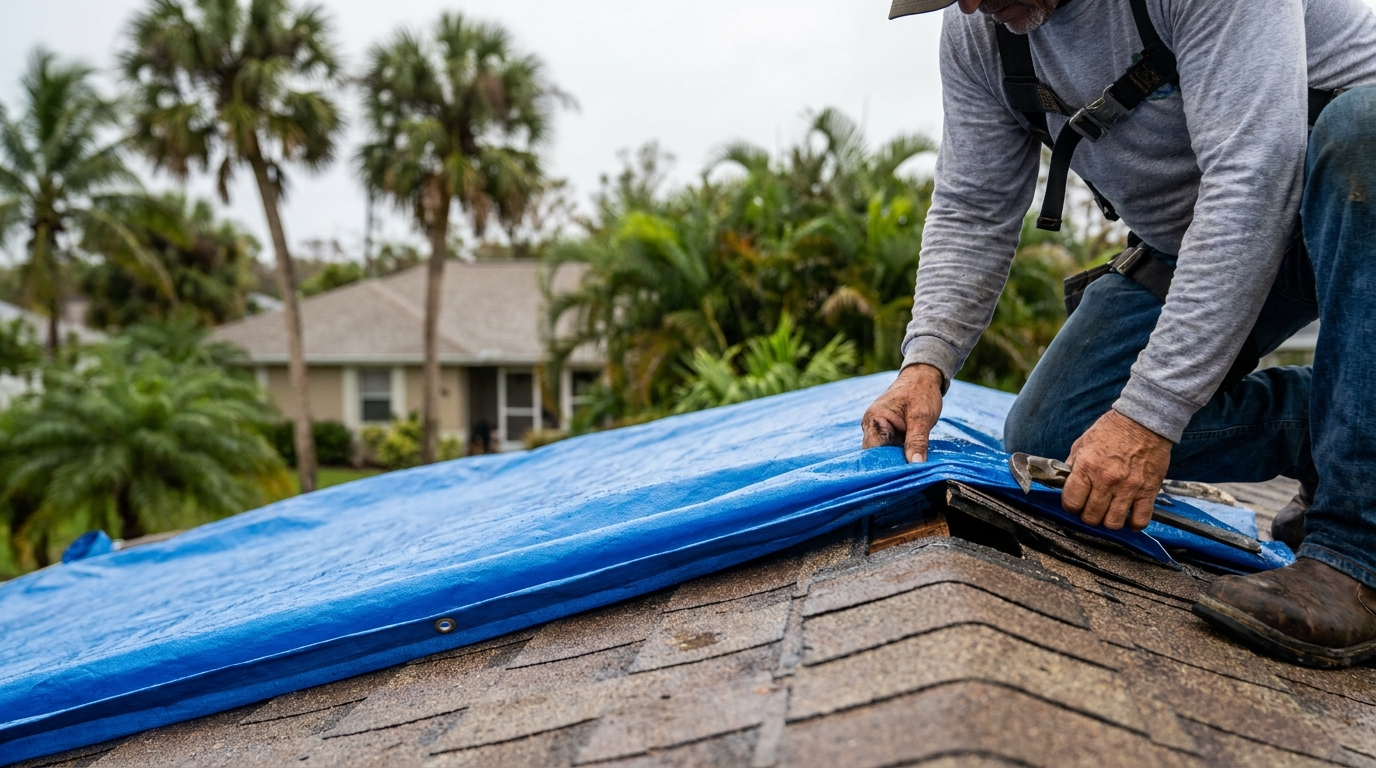
A roof tarp is a temporary repair, not a permanent fix. Professionals secure a heavy-duty polyethylene or reinforced vinyl tarp over the damaged section of your roof, anchoring it with wood strapping and fasteners so it can withstand wind and driving rain.
The goal is straightforward: stop water intrusion until a permanent repair or full replacement can be completed. In St Petersburg's climate, where afternoon thunderstorms during the rainy season can deliver heavy rainfall in a very short time, that temporary barrier is often the difference between a manageable repair and gutted drywall, ruined insulation, and mold remediation.
Clear Signs Your St Petersburg Roof Needs Emergency Tarping
Not every roof issue qualifies as an emergency. But several conditions almost always do, and recognizing them quickly matters.
1. Missing or Displaced Shingles After a Wind Event
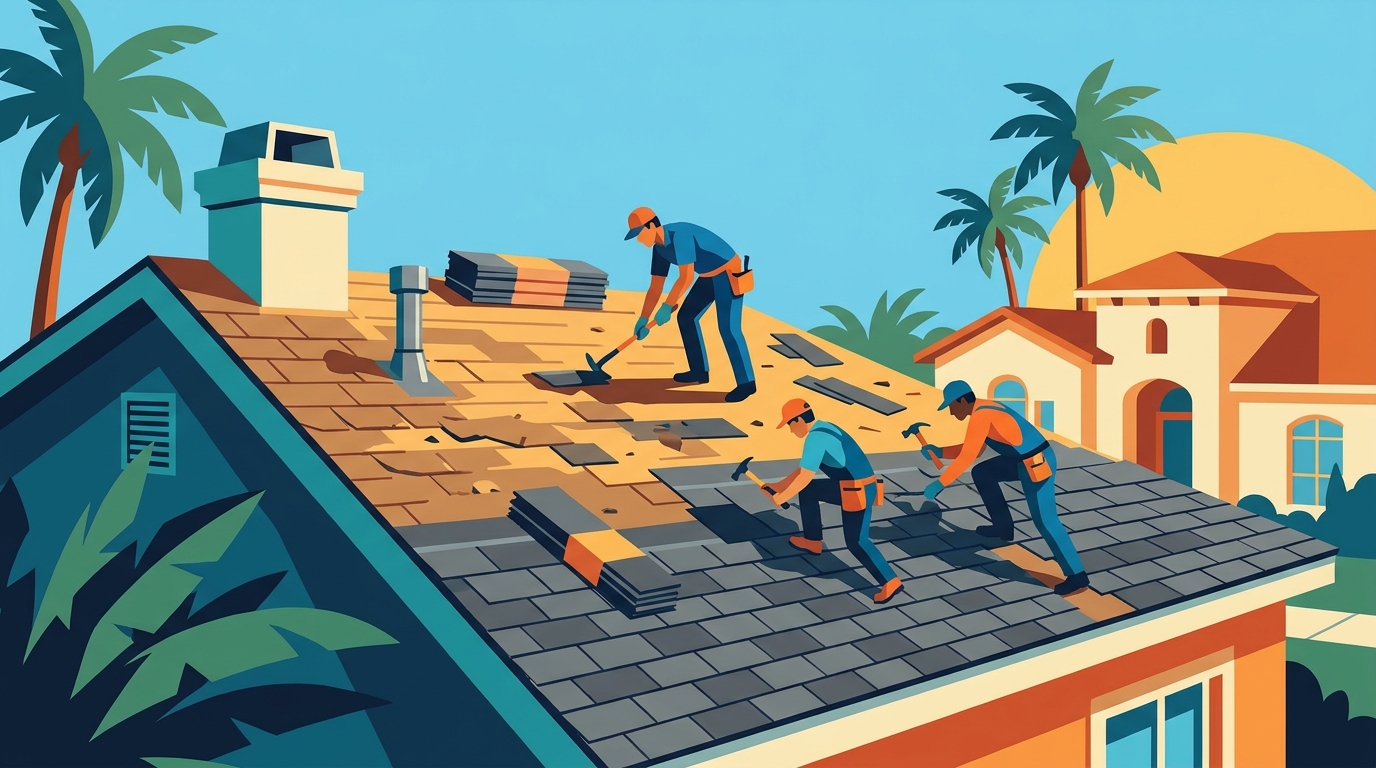
St Petersburg sits in a wind-exposed coastal zone. Tropical systems, summer thunderstorms, and even strong sea breezes off the Gulf can lift or tear shingles, especially on older roofs in neighborhoods like Old Northeast, Historic Kenwood, or Snell Isle where housing stock often dates back decades.
If you can see exposed underlayment, bare decking, or daylight from the attic, water will find its way in. Tarping is the right call.
2. Visible Holes, Punctures, or Tree Damage
The mature oaks and palms that give St Petersburg neighborhoods their character also drop heavy limbs during storms. A puncture from a falling branch — even a small one — creates a direct channel into your attic.
If a tree limb has impacted your roof, assume there is structural damage underneath even if the surface looks intact. Tarp it, then have it inspected.
3. Active Interior Leaks During or After a Storm
Water staining on ceilings, drips down walls, or pooling on floors during rain means water is already inside your home's envelope. Every additional hour of exposure compounds the damage — wet insulation loses R-value, drywall sags, and mold can begin colonizing quickly in Florida's year-round humidity.
4. Lifted, Curled, or Cracked Shingles Across Large Areas
Wind doesn't have to rip shingles off to compromise them. If a windstorm has lifted the seal strips across a wide section of your roof, those shingles are no longer waterproof. You may not see a leak yet, but the next rain will find the gaps.
5. Damaged Flashing Around Chimneys, Vents, or Skylights
Flashing failures are a top cause of post-storm leaks. If you can see bent, missing, or separated metal around any roof penetration, water is likely already getting in.
6. Granule Loss and Exposed Mat
After a hailstorm or sustained high winds, check your gutters and downspout outlets. Heavy granule accumulation paired with shiny black patches visible on the roof itself means the asphalt mat is exposed and degrading fast.
Why Speed Matters More in St Petersburg Than Most Markets
Florida's Gulf Coast climate is uniquely punishing to compromised roofs. A homeowner in a drier region might have weeks to schedule repairs after minor damage. In Pinellas County, you often have hours to days.
Three local factors drive that urgency:
- Daily summer storms. From June through September, afternoon thunderstorms are nearly a given. A roof that's compromised in the morning can be leaking by 3 p.m.
- Hurricane season. Hurricane season brings an extended period of elevated storm risk each year. Once a system is named in the Gulf, demand for emergency tarping spikes and response times stretch.
- Humidity and mold risk. St Petersburg's year-round humidity means any moisture trapped inside walls or attic spaces becomes a mold problem quickly.
There's also an insurance dimension. Most Florida homeowners' policies require you to take reasonable steps to mitigate further damage after a loss. Failing to tarp a known opening can give a carrier grounds to reduce or deny a claim. Documenting the damage with photos before tarping — and keeping the receipt from a licensed roofer — protects your claim.
What Professional Tarping Looks Like
A proper emergency tarp installation isn't a blue plastic sheet held down with bricks. Done right, it involves:
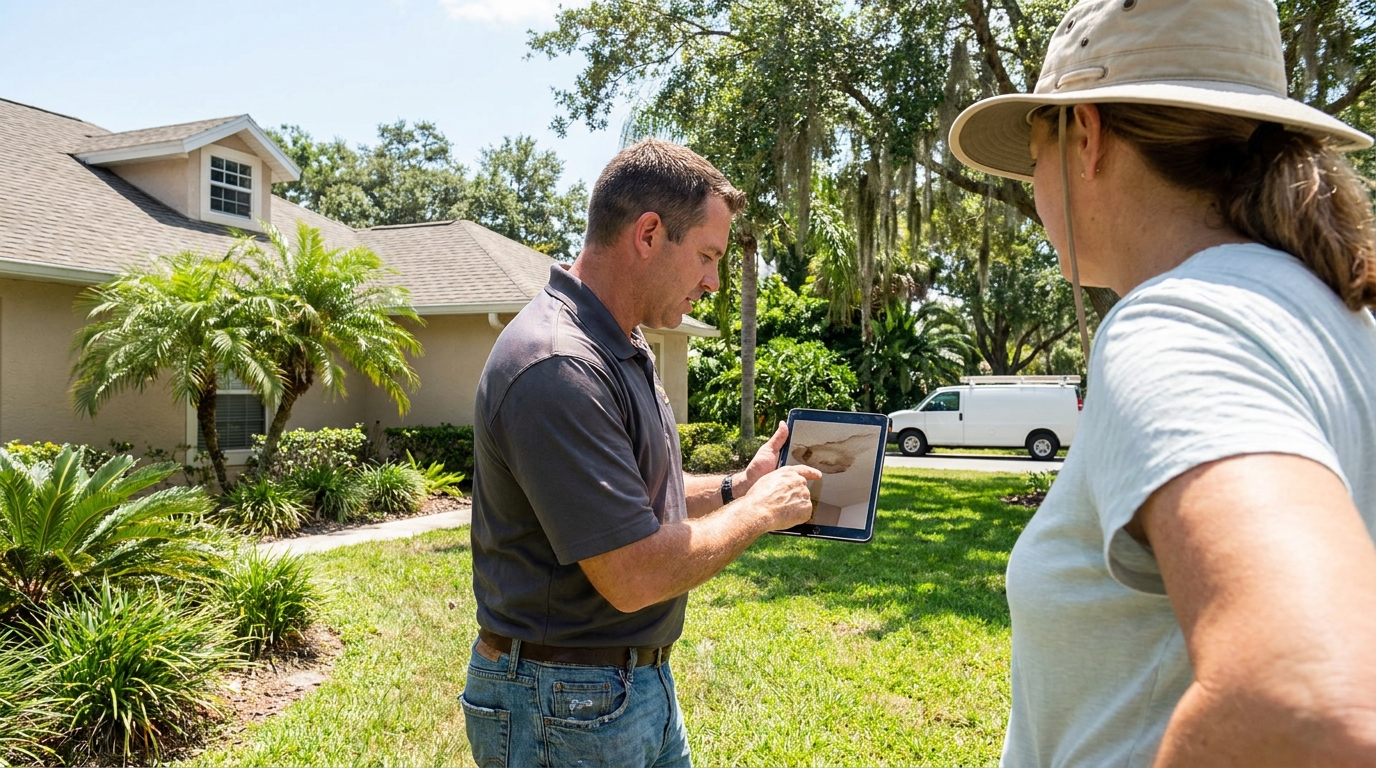
- Inspection and photo documentation of the damage for your records and insurance file
- Heavy-duty tarp material sized to cover the affected area plus a generous overlap
- Wood furring strips fastened along the tarp edges to create a wind-resistant seal
- Anchoring at the ridge so water sheds off the tarp rather than under it
- A written scope of the temporary repair and recommended next steps
In Florida, roofing work — including emergency repairs — must be performed by a contractor licensed by the Florida Department of Business and Professional Regulation. Pinellas County and the City of St Petersburg also have permitting requirements for permanent roof work that follows the temporary tarp. A licensed local roofer will know how to sequence the emergency response with the eventual permanent repair to keep your insurance claim and any required permits in order.
What to Do Before the Roofer Arrives
- Move valuables and electronics away from any active leak
- Place buckets and towels to contain interior water
- Photograph everything — exterior damage, interior damage, and any debris
- Do not climb on a wet or damaged roof yourself
- Contact your insurance carrier to open a claim
Frequently Asked Questions
How long does an emergency roof tarp last?
A professionally installed tarp is designed to hold up for a period of weeks, depending on weather exposure. It's a bridge to permanent repair, not a long-term solution.
Will homeowners insurance cover emergency tarping in Florida?
In most cases, yes — emergency mitigation is generally covered under the loss-mitigation provisions of a standard Florida homeowners' policy. Confirm with your specific carrier and save all documentation and receipts.
Can I tarp my own roof?
It's legal, but rarely advisable. Wet roofs are extremely slippery, damaged decking may not support your weight, and a poorly anchored tarp can blow off in the next storm — sometimes causing more damage than the original opening.
How quickly can a roofer respond after a storm?
Outside of major named storms, a local roofer can often respond same-day or within 24 hours. During active hurricane events or immediately after, response times stretch — which is why calling early in the damage cycle matters.
Does emergency tarping require a permit in St Petersburg?
The temporary tarp itself typically does not require a permit in Pinellas County, but the permanent repair that follows generally does. A licensed contractor will handle the permitting sequence for you. Attempting permanent repairs without the required permits can complicate your insurance claim and create issues at future home sale inspections.
What should I tell my insurance company when I call to open a claim after storm damage?
Report the date and type of storm event, describe the visible damage, and state that you are arranging emergency tarping to prevent further loss. Provide photo documentation and ask your carrier for a claim number. Keep all contractor receipts — insurers typically require proof that a licensed roofer performed any emergency mitigation work.
The Bottom Line for St Petersburg Homeowners
Emergency roof tarping is one of those services you hope never to need but should know how to access. The signs are usually clear: visible damage, active leaks, missing shingles, or impact from debris. The right response is to document, mitigate, and bring in a licensed professional before the next storm cell rolls through.
Homeowners in St Petersburg who want a professional assessment and tarp installation can contact SCM Roofing, LLC at https://scmroofingfl.com or call (855) 726-7663 for a free estimate. SCM Roofing, LLC offers 24/7 emergency service and holds a 4.9-star rating from 239 Google reviews as of April 2026. One customer wrote that the team delivered work that was "handled quickly and professionally" — a hallmark of their emergency response approach. With 25-plus years of experience serving Pinellas County and the broader Gulf Coast, SCM Roofing, LLC's team is familiar with the storm patterns, housing stock, and insurance dynamics specific to this market — and can sequence emergency tarping with whatever permanent repair your roof ultimately needs.