How Tampa Homeowners Can Get Up to $10,000 in Roof Upgrade Grants Through My Safe Florida Home
Yes, Tampa homeowners can get grant money to upgrade their roof. The My Safe Florida Home program provides matching grants up to $10,000 for wind-hardening improvements like roof-to-wall connections, secondary water barriers, and roof deck upgrades. For homeowners in Hillsborough County dealing with rising insurance costs, this is one of the most practical ways to strengthen your roof and reduce your premium at the same time.
Table of Contents
- What Is the My Safe Florida Home Program and How Does It Work?
- Do Tampa Homeowners Qualify for MSFH Grants in 2026?
- What Roof Upgrades Does the Grant Cover?
- How Much Can Tampa Homeowners Actually Save on Insurance?
- What’s the MSFH Application Process Step by Step?
- What SCM Roofing Recommends
- Frequently Asked Questions
- Key Takeaways
What Is the My Safe Florida Home Program and How Does It Work?
My Safe Florida Home is a state-funded program that helps Florida homeowners pay for hurricane-hardening upgrades. The state puts up $2 for every $1 you spend, up to a maximum grant of $10,000. That means a $15,000 roof upgrade could cost you as little as $5,000 out of pocket.
The program reopened in August 2025 with $352 million in funding — $280 million in new appropriations plus $72 million carried over from the previous cycle. It’s first-come, first-served, and funding does run out.
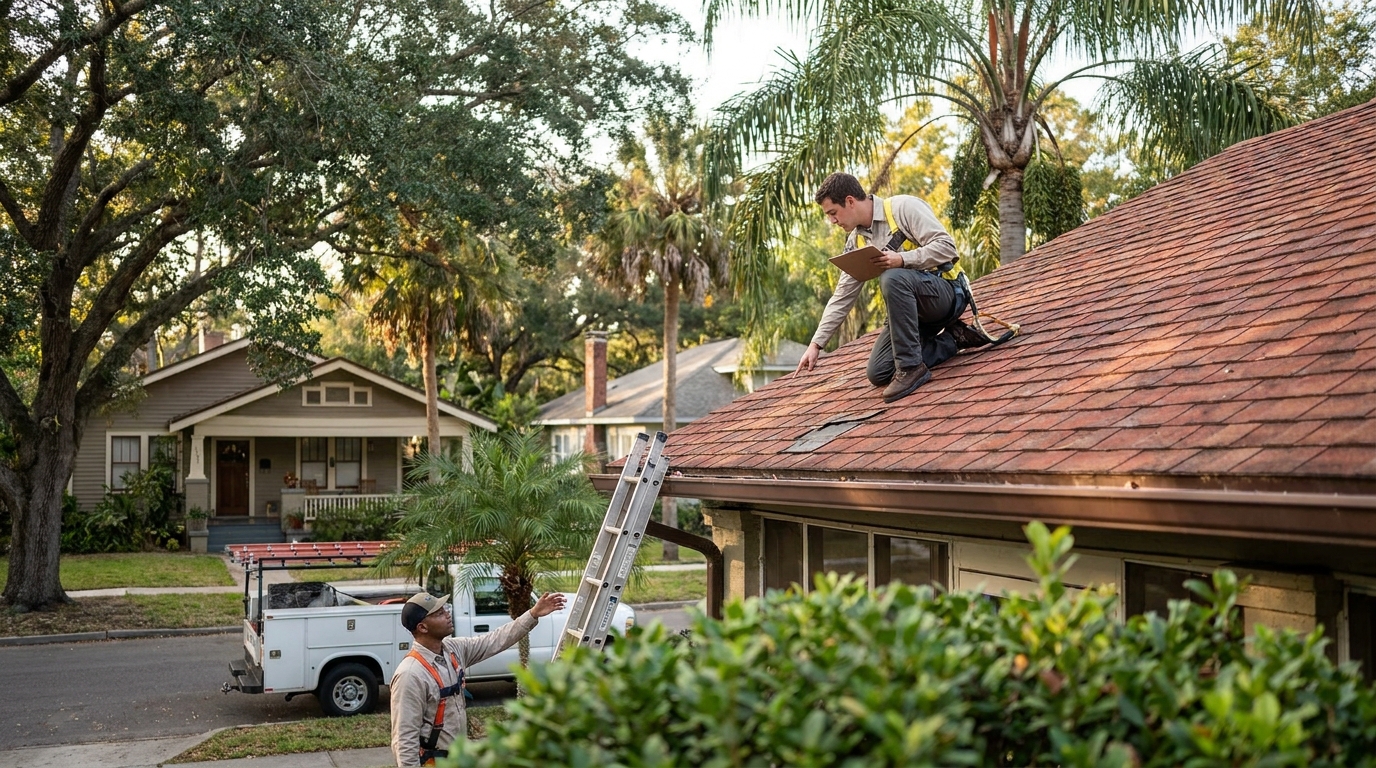
Here’s how the structure works. First, you get a free wind mitigation inspection through the program. That inspector evaluates your home and recommends specific improvements. You then apply for grant funding based on those recommendations. Once approved, you hire a licensed contractor, complete the work, and the state reimburses up to $10,000 of the cost.
If your household income falls at or below 80% of Hillsborough County’s median income, you may qualify for the full $10,000 without any matching contribution. That’s a full grant with zero out-of-pocket cost for eligible low-income homeowners.
Do Tampa Homeowners Qualify for MSFH Grants in 2026?
Most Tampa homeowners qualify, but there are specific requirements. Your home must be a site-built single-family house or townhouse — no condos, no manufactured homes, no more than three stories. It must have a homestead exemption, and the insured value has to be $700,000 or less.
The program assigns applicants to priority groups. Low-income homeowners age 60 and older get first priority. After that, remaining low-income applicants, then everyone else. Tampa has a large population of retirees in neighborhoods like Seminole Heights and South Tampa who fall into that first priority group.
One detail that trips people up: for certain grant categories, your home’s original building permit must predate January 1, 2007. Many homes in older Tampa neighborhoods like Palma Ceia, Seminole Heights, and much of South Tampa were built well before that cutoff. Newer construction in areas like New Tampa and FishHawk may already meet current wind standards, which can limit grant eligibility for some upgrades.
The program also expanded eligibility in the 2025-2026 cycle to include homes outside the wind-borne debris region, opening the door for more inland Hillsborough County properties.
What Roof Upgrades Does the Grant Cover?
The grant covers specific hurricane-hardening improvements — not cosmetic upgrades or general maintenance. Only improvements recommended during your free MSFH inspection qualify. The major roofing-related upgrades include:
Secondary Water Resistance (SWR): This is the big one. A secondary water barrier is a peel-and-stick membrane applied directly to your roof deck before the shingles or tiles go on. If your roof covering blows off during a hurricane, SWR keeps water from pouring into your home. This single upgrade has reduced water damage claims by roughly 60% in homes that lost partial roof covering during recent storms.
Roof-to-Wall Connections: This covers upgrading the hardware that ties your roof structure to your walls. In many older Tampa homes, the roof trusses are connected to the walls with basic toe-nails — just nails driven at an angle. The grant can fund upgrading to hurricane clips or straps, which dramatically improve your roof’s ability to stay attached during high winds.
Roof Deck Attachment: This means improving how your plywood or OSB roof deck is fastened to the trusses. Older homes often have undersized nails at wider spacing. The upgrade brings the fastening pattern up to current code standards.
Opening Protection: While not strictly a roofing item, impact-rated windows, doors, and garage doors work together with your roof system to maintain your home’s pressure envelope during a hurricane. The grant covers these too.
Tampa sits right on Tampa Bay, and Hillsborough County’s hurricane exposure is serious. The shallow bay amplifies storm surge, and older neighborhoods have homes built long before modern wind codes existed. These upgrades aren’t optional extras — they’re the difference between a home that rides out a storm and one that doesn’t.
How Much Can Tampa Homeowners Actually Save on Insurance?
The roof is now the single biggest factor in what you pay for homeowners insurance in Florida. In 2026, carriers are back in the market, but they’re selective. A code-compliant roof with documented wind mitigation features is the fastest path to a better premium.
MSFH-funded upgrades directly improve your wind mitigation inspection results. Here’s what that means in dollars:
- Upgrading from toe-nail roof-to-wall connections to hurricane straps can reduce the wind portion of your premium by 30-40%
- Adding a secondary water barrier qualifies you for one of the most valuable wind mitigation credits available
- A combination of SWR, hurricane straps, and opening protection can reduce your total premium by $800 to $2,500 per year in Hillsborough County
For a Tampa homeowner paying $4,000 to $6,000 annually — which is common in 2026 — these savings add up fast. A $5,000 out-of-pocket investment through the MSFH matching grant that saves $1,500 per year pays for itself in just over three years.
After any MSFH-funded work is completed, get an updated wind mitigation inspection. That’s the document your insurance carrier uses to calculate your credits. Without the updated form, you won’t see the savings.
What’s the MSFH Application Process Step by Step?
The process takes time. Plan for 4 to 12 months from initial signup to reimbursement. Here’s the sequence:
Step 1: Sign up at mysafeflhome.com. Create an account and submit your application. You’ll need your property address, homestead exemption documentation, and insurance policy details.
Step 2: Get your free inspection. The program schedules a qualified inspector to evaluate your home. They assess your roof, connections, openings, and overall wind resistance. This inspection is free.
Step 3: Review your inspection report. The inspector’s report lists recommended improvements with estimated costs. Only these recommended items qualify for grant funding.
Step 4: Apply for the grant. Using your inspection report, you apply for funding through the portal. You’ll be placed in a priority group and assigned to a funding queue.
Step 5: Wait for approval. This is where patience matters. Do NOT start any work before your grant is officially approved. Starting work early disqualifies you from reimbursement. This is the number one mistake Tampa homeowners make.
Step 6: Hire a licensed contractor and complete the work. Once approved, you hire a contractor, pull permits through Hillsborough County, and complete the approved upgrades.
Step 7: Final inspection and reimbursement. After the work is done, the program verifies completion and issues your reimbursement.
The program has faced some criticism. State Rep. Brian Hodgers filed HB 1359, arguing that some contractors funded through the program have cut corners — particularly on secondary water barrier installation, where some crews have simply taped plywood seams instead of installing proper peel-and-stick membrane. His bill would require inspectors to verify proper installation under penalty of perjury. While that bill hasn’t advanced yet, it highlights why choosing the right contractor matters.
What SCM Roofing Recommends
Here’s what we tell Tampa homeowners who ask about this program: apply now, but be smart about your contractor selection.
The MSFH grant is real money, and for most Tampa homeowners with pre-2007 homes, the upgrades it funds are exactly what your house needs. But the grant is only as good as the work that gets done.
At SCM Roofing, we help Tampa homeowners understand their inspection report and plan upgrades that actually meet code. As a GAF Master Elite certified contractor — that’s the top 3% of roofing contractors in North America — we know exactly what the program requires and what inspectors look for during verification.
Watch out for storm chasers and unlicensed contractors who offer to do MSFH work at bargain prices. If they skip the secondary water barrier or cut corners on roof-to-wall connections, you’re worse off than before you started. The whole point of this program is hurricane hardening — not just putting new shingles on the same vulnerable structure.
SCM Roofing pulls all permits through Hillsborough County and documents every phase of the work. When the final MSFH inspector shows up, everything checks out.
---
Frequently Asked Questions
Q: How much does the My Safe Florida Home grant pay for a new roof in Tampa?
A: The MSFH grant covers up to $10,000 through a 2:1 matching structure, meaning the state pays $2 for every $1 you spend on approved hurricane-hardening upgrades. For Tampa homeowners at or below 80% of Hillsborough County’s median income, the full $10,000 may be available with no matching requirement.
Q: Can I use the MSFH grant to replace my entire roof in Hillsborough County?
A: The grant covers specific wind-hardening upgrades recommended by your MSFH inspector, which often includes secondary water barriers and roof deck improvements done during a reroof. It does not fund a purely cosmetic roof replacement. However, if your inspector recommends SWR and roof deck upgrades, those improvements are typically done as part of a full reroof in Tampa.
Q: How long does it take to get approved for the My Safe Florida Home program?
A: Tampa homeowners should plan for 4 to 12 months from initial application to reimbursement. The inspection is usually scheduled within a few weeks, but grant approval and funding can take several months depending on your priority group and available funding.
Q: When should Tampa homeowners apply for the MSFH grant before hurricane season?
A: Apply as early in the year as possible. The program is first-come, first-served, and the 4-12 month timeline means applying in January or February gives you the best chance of having work completed before hurricane season starts June 1. Applying in April or May likely means your project extends into or past hurricane season.
Q: Does a new roof from the MSFH program lower my insurance in Tampa?
A: Yes. MSFH-funded upgrades like secondary water barriers, hurricane straps, and improved roof deck attachment directly improve your wind mitigation inspection results. Tampa homeowners typically see annual insurance savings of $800 to $2,500 depending on the combination of improvements, which means the program often pays for itself within three to four years.
---
Key Takeaways
- The My Safe Florida Home program offers Tampa homeowners up to $10,000 in matching grants for roof upgrades that harden your home against hurricanes and lower your insurance premium.
- Most Hillsborough County homes built before 2007 qualify, with priority given to low-income homeowners age 60 and older.
- Do not start any work before your grant is approved — this is the most common mistake and it disqualifies you from reimbursement.
- Choose a licensed, certified contractor like SCM Roofing who understands MSFH requirements and pulls all permits through Hillsborough County.
---
Need help understanding your My Safe Florida Home inspection report? SCM Roofing provides free estimates across Hillsborough County. Call us at 855-SCM-ROOF or request an appointment online.